
Newberg City Directories on Local Shelves
Old names and odd street spellings open doors in a Newberg city directory. These books captured households, shops, and phone lines at a particular moment. The surviving editions cover some years. They skip others entirely. A residents directory search works best when you begin with a spelling or an address you already trust, so anchor your first lookup there. Compare a few neighboring editions before you settle on a conclusion. One listing can send you toward a deed, a newspaper item, or a census page. A blank line, in turn, may just mean the book for that year never survived.
| Directory collection | Documented years | Verified holder | Research route |
|---|---|---|---|
| Polk & Co., Yamhill/Washington County | 1909 | Yamhill County History Museum | Holdings inquiry or appointment |
| Yamhill County City Directory | 1923 | Yamhill County History Museum | Holdings inquiry or appointment |
| Salisbury, McMinnville and Newberg | 1947, 1949, 1952, 1956 | Yamhill County History Museum | Holdings inquiry or appointment |
| Newberg telephone directories | 1962-1984, with listed gaps | Yamhill County History Museum | Holdings inquiry or appointment |
| Johnson and later regional directories | 1971-2015, selected editions | Yamhill County History Museum | Holdings inquiry or appointment |
The museum sits at 11275 SW Durham Lane in McMinnville, reachable at 503-472-2842. Its research-library page reports walk-ins closed through August 2026 because of construction. Email appointments may work when conditions allow. Call or write before driving over. The Newberg Public Library serves as a handy genealogy gateway. Yet its public page does not confirm that it holds these particular directory volumes. The museum's directory-holdings page appears below.
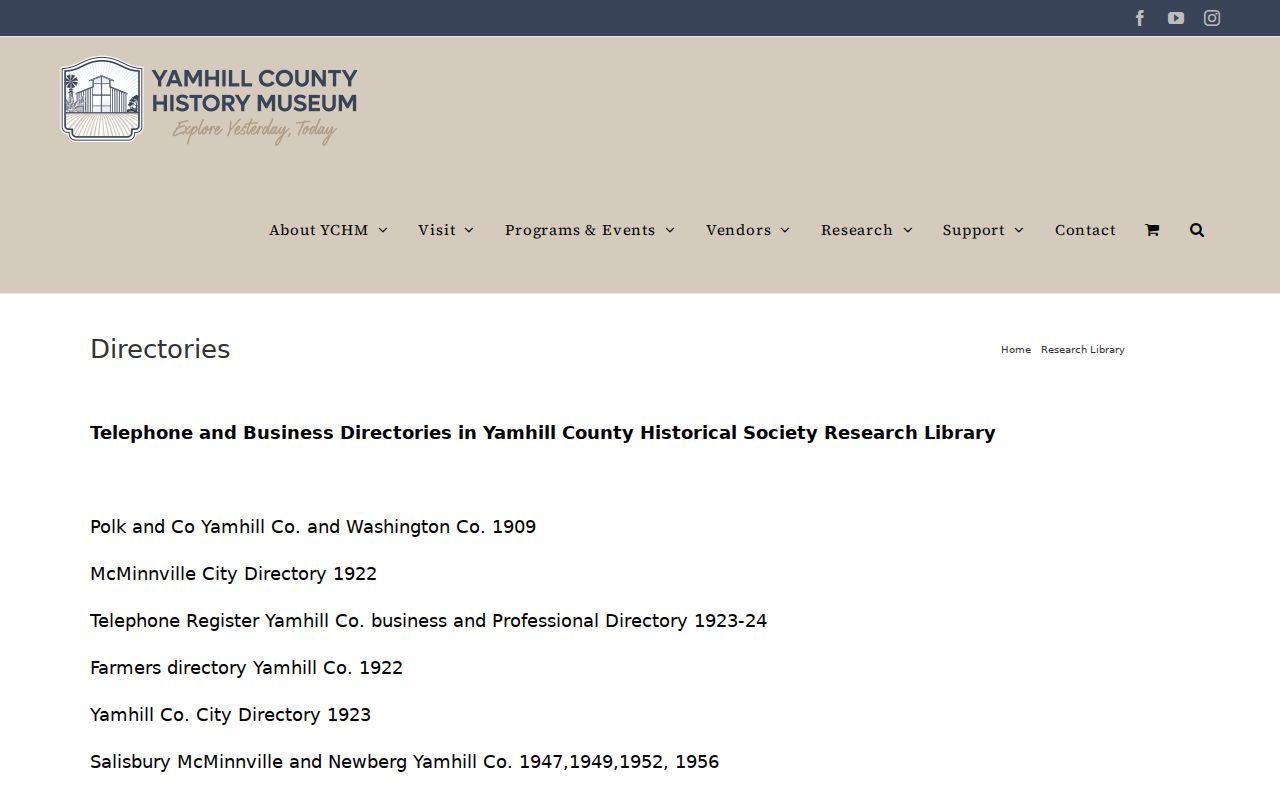
When you write, request a specific title and date. Asking for a directory year the shelf inventory does not list only slows the reply.
Newberg City Directory Publisher Years
Publisher shifts tell part of the story. The earliest explicit item is the 1909 Polk & Co. Yamhill/Washington County directory. A 1923 newspaper notice for the countywide book promised that each town would be canvassed. It would be canvassed as a complete unit. Salisbury volumes name Newberg directly in 1947, 1949, 1952, and 1956. Later shelves add selected Gunness telephone binders. Johnson McMinnville and Newberg directories appear for 1971, 1976, 1977, and September 1979. Regional Newberg-area and Yamhill County books round out the collection.
The telephone material helps, though it runs irregularly. Gunness binders cover selected dates from June 1927 through October 1956. Locally listed Newberg telephone books begin in June 1962. They run through selected 1984 editions. The museum also lists a 1960-61 Newberg Graphic business directory. That one documents businesses, not every household in town. The newest regional title held is a November 2015 Frontier directory. Its presence does not mean printing stopped that year.
Note: A dated shelf list records what survives locally. It is not every edition ever printed or every person who lived in Newberg.
Newberg City Directory Access Routes
Missing volume? Several routes still work while access is delayed. The Newberg Public Library genealogy page links free to Early Oregonians, FamilySearch, and Historic Oregon Newspapers. The library stands at 503 E. Hancock Street and has long housed genealogy and local-history space, but any claimed directory holding still needs a desk or catalog confirmation. The museum remains the one documented directory shelf. Newberg Public Library's genealogy and historical-research gateway is pictured here.
Library links can fill a date gap. They cannot replace an inspected city-directory volume.
Once research moves past printed listings, the museum research library holds a wider local-history inventory. The Oregon State Archives' Historical Records Index opens doors to Yamhill estates and guardianships. It also reaches divorces, naturalizations, and marriages. Any of these might confirm a family transition. Each carries its own access limits, though, and none matches a directory's publication-date snapshot. The museum research-library page supplies the access context shown below.
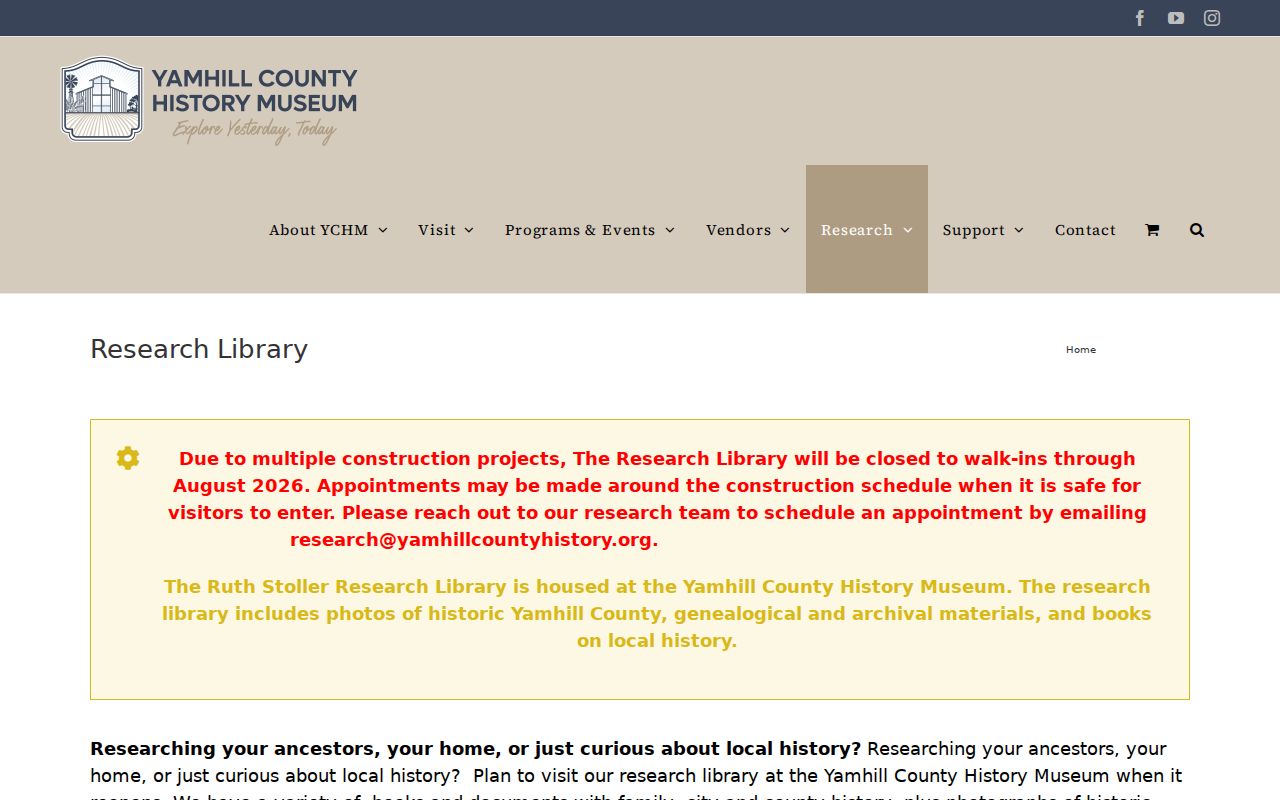
Its construction notice is reason enough to contact the holder before driving over from Newberg.
Reading Newberg City Directory Entries
No scanned Newberg or Yamhill city-directory entry is published for direct review. Assigning local abbreviation, spouse, occupation, ownership, or boarding-house conventions without the exact book in front of you would invite error. Once a volume is in hand, record only what is printed. Photograph or transcribe the front matter too, since the abbreviation list usually lives there. Keep the spelling, street form, and date together. This lets another source be compared fairly later.
| Printed name | Record spelling, initials, and order exactly as shown. |
|---|---|
| Street address | Preserve number, directional, street type, and punctuation. |
| Occupation or business | Record it only if the inspected entry supplies it. |
| Household notation | Do not infer spouse, ownership, or boarder status without a key in that volume. |
| Volume evidence | Note title, publisher, issue date, and page for later checking. |
- Criss-cross directory
- A directory arranged by street address rather than by name. Confirm that a particular Newberg volume actually has this section before relying on it.
- Householder index
- An index that can organize listed households or addresses. No verified Newberg run was found in the research, so treat it as a volume-specific feature.
- Abbreviation key
- The publisher's explanation of shortened words or symbols, usually near the front or back. It is essential before interpreting an entry.
Newberg City Directories by Address
Address-first searching works best when the source itself is solid. Begin with the street number and the directory year. Preserve the directional prefix and the street-type abbreviation. Then widen the net to nearby editions. Newberg uses directional address components. Historic records render numbered streets and suffix punctuation in several ways. Search with and without the directional. Try both the abbreviated and the full street type. That prevents an avoidable miss.
Never assume a reverse or criss-cross section exists just because another town's book had one. The local shelves hold city, regional, telephone, and business titles. But no confirmed continuous Newberg reverse-directory run exists. If the book is name-first, work the name index first. Then compare the printed address against maps, deeds, and newspaper references. For a modern parcel trail, turn to the address-focused Newberg street directory lookup. Do not treat an old listing as current evidence.
Newberg Sanborn Maps and Listings
Newberg holds five Sanborn map editions: 1892, 1902, 1905, 1912, and 1929. These pair well with the historic city directory. The Newberg Public Library keeps them on file. A map places a printed address in its true period setting. It shows the street grid, nearby corners, and the building footprints of the era. That context helps you judge whether a house number fits its historic block. Sanborn sheets name no residents, though. Treat them as a location check, not a household source.
Newberg's historic mapping resource appears below.
The library itself is part of that story. Newberg's Carnegie Library opened in 1912 after a $10,000 Carnegie grant. A 1986 expansion added room for genealogy, local history, and business collections. That local history shelf explains why maps and library routes still matter for Newberg lookups, sitting alongside the McMinnville material, even though the Museum documents the exact directory holdings.
Tracing Newberg City Directory Households
A directory entry is a time-stamped lead. It is not a final identity finding. Build a household trail by moving from one inspected volume to nearby editions, then compare other sources that answer different questions about the same Newberg family. Federal population census releases follow a 72-year rule. The 1950 census is the newest full federal population census available, and 1960 is scheduled for release in April 2032. Match the directory date to the closest available census rather than forcing a later census to answer an earlier address question.
- Choose one documented directory or telephone-book date and transcribe the name and address exactly.
- Check the nearest earlier and later held editions for a move, spelling change, or disappearance.
- Compare the address with the closest Sanborn map, where the period falls within the five local map editions.
- Use the nearest released census, newspaper item, deed party, or probate index as an independent check.
- Save the title, page, and source date before drawing a family or house-history conclusion.
A listing can vanish for many reasons. The person may have moved, died, changed a telephone arrangement, or simply been omitted. The next surviving edition may not be comparable. The Oregon Historical Records Index offers Yamhill estate and guardianship leads. Those may help test an estate transition. Local newspapers can supply notices and obituaries to close the gap.
Newberg Newspaper Records for Gaps
Historic Oregon Newspapers bridges missing directory years well. Its Newberg Graphic browser catalogs the title from 1888 through 1993. Search a surname with a street, business, probate term, or date range. Ads, social notices, estate notices, obituaries, and local business references can clarify a move or an address. One directory issue alone cannot do that. The catalog range does not prove each issue is digitized. The Historic Oregon Newspapers Newberg Graphic browser appears below.
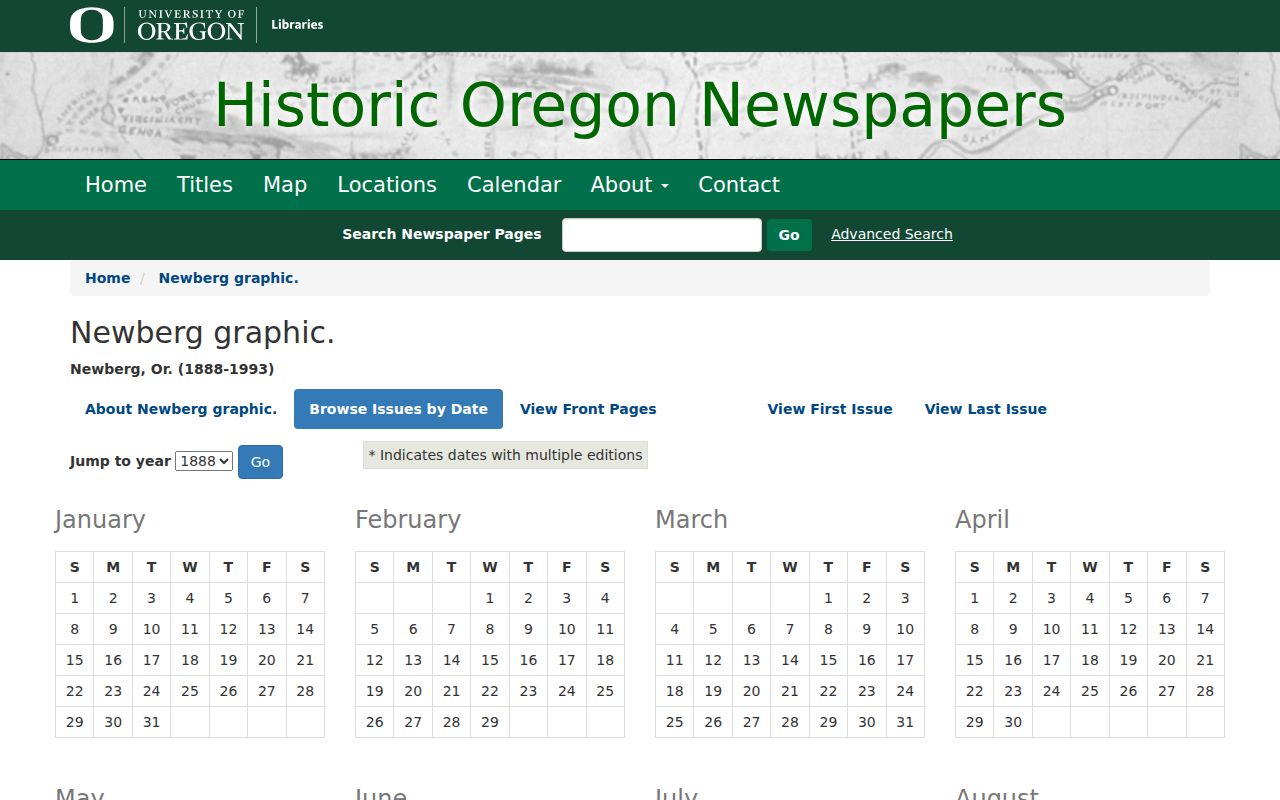
Read every search result with its issue date and page context. Never copy a mention straight into a household timeline without a second record to back it up.
Note: A newspaper mention may describe a business, visitor, event, or estate rather than a person's residence at that address.
Newberg Archive Companions for Families
George Fox University adds a distinctive archive route when a historic Newberg family intersects Friends or Chehalem institutions. The George Fox archives catalog includes the Northwest Yearly Meeting Local Churches collection, about 56 cubic feet from circa 1875 to 2010. Verified material includes a Newberg Friends Church directory accession dated 1981 through 2004. Chehalem Center record books dated 1878 through 1970 are also held. These are historical and consent-sensitive materials. They are not a current contact list. George Fox University's Mapping Our History grant page is shown here.
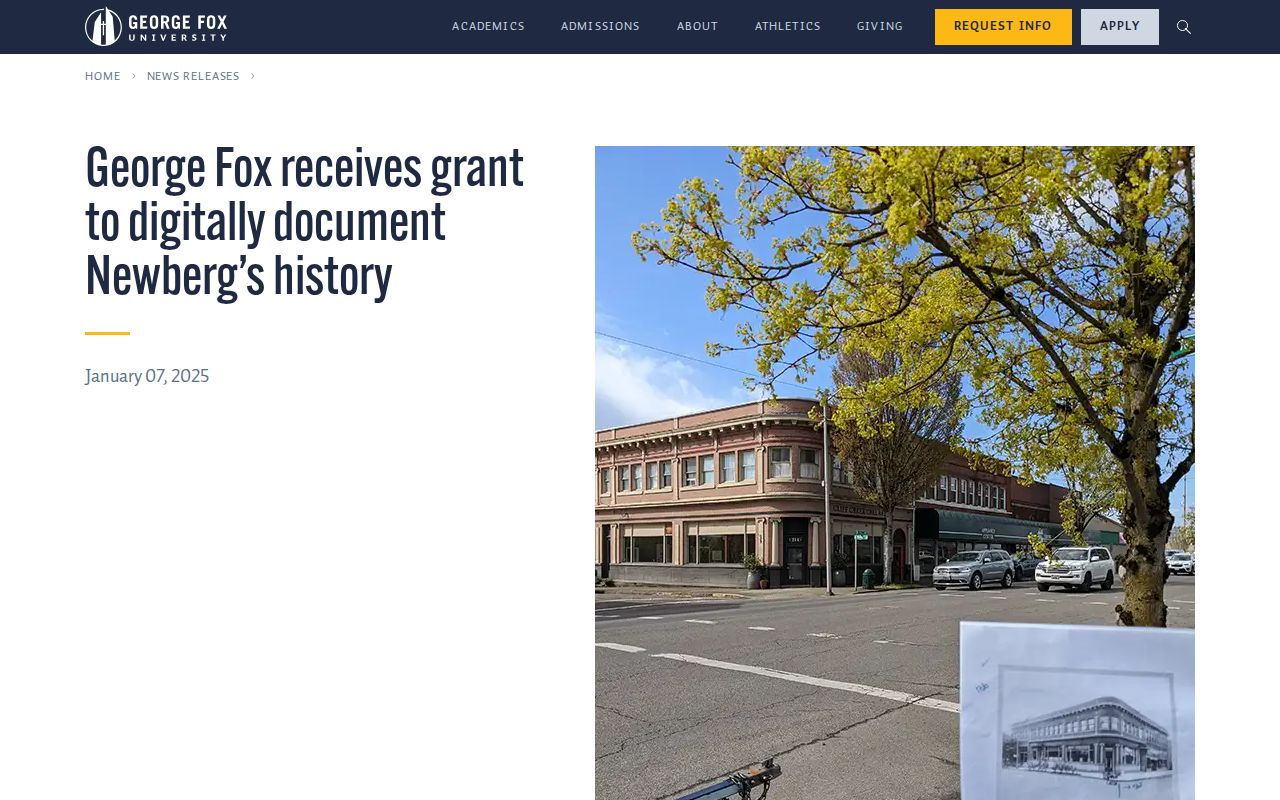
That project began in 2022 and maps East First Street business timelines and photographs, which can add place context to an independently documented directory address in Newberg.
Newberg Historic Directory Timeline Clues
Newberg's record geography explains why old material often points beyond a modern city office. Yamhill County's early records can be cataloged through Lafayette or McMinnville. Newberg incorporated in 1889. It became a city in 1893. The timeline below separates verified local milestones from unsupported claims. No authoritative source documents a first standalone directory or a continuous run. No final print date is documented. The same gaps cover any citywide renumbering and any destroyed-record event. Treat those gaps as real.
- 1909: Polk & Co. is the earliest explicitly listed locally held county directory.
- 1912: Newberg Carnegie Library opened, later becoming a local map and research route.
- 1923: A countywide directory notice described a town-by-town canvass.
- 1986: The library expansion added genealogy and local-history space.
- 2025: George Fox announced a grant-supported expansion of Mapping Our History.
Use that sequence to choose the right records holder for any Newberg lookup. Then preserve gaps rather than smoothing them into an invented continuous directory history.